
Table of Contents
A Quiet Welcome to the Season of Enough
Before you step into this seasonal food winter guide, I want to give you a sense of what you’ll find here — not rules, not rigid routines, but gentle invitations. This blog isn’t about perfect cooking or curated kitchen moments. It’s about living closely with the season you’re in, noticing the small comforts winter offers, and discovering how seasonal food can become a steady, grounding part of your days.
Inside, you’ll wander through the quiet rhythm of winter on the boat — how the shorter days reshape our meals, how a single pot on the stove can warm more than the cabin, and how cooking with what we have becomes its own kind of nourishment. You’ll find simple ideas for eating seasonally, reflections on cooking in small spaces, and the soft philosophy that has carried us through these colder months: that comfort is often found in the simplest things.
You’ll also meet the deeper themes woven through winter itself — the season of “enough,” the ease that comes from slowing down, and the quiet sense of belonging that grows when we cook with what’s already near us. This blog is less about recipes and more about rhythm; less about doing, more about noticing.
If you’re longing for a calmer way of eating, living, and moving through the darker months — you’ll feel at home here.
Settle in.
Let winter unfold gently.
And let these pages show you how nourishing simplicity can really be.
Simple Seasonal Food: Nourishing Winter Comforts That Warm the Soul
Winter always arrives quietly on the water.
Not with drama or urgency, but with a steady coolness that settles into the mornings and lingers long after dark. The light changes first — turning pale and silvery — and then the air follows, sharper around the edges, carrying that familiar hush that asks you to slow down.
This is when I begin to lean more deeply into simple seasonal food.
Not out of necessity, but out of instinct.
Winter has a way of drawing you inward — toward warmth, toward stillness, toward meals that feel like they hold you from the inside out.
On the boat, the shift feels even more intimate.
The kettle rattles a little louder against the cold metal.
The windows mist at the slightest heat.
And every small act in the kitchen — chopping an onion, lighting the hob, wrapping both hands around a steaming mug — becomes a kind of grounding.
Winter cooking isn’t about extravagance.
It’s about nourishment.
About listening to what the season is offering and trusting that it’s enough.
Potatoes, brassicas, winter greens, onions, squash — honest ingredients that thrive in the dark months and quietly remind us to do the same.
When the world outside feels bare, these foods feel full.
When the days grow shorter, these meals stretch further.
And when life becomes slower, simple seasonal food becomes a soft anchor — something warm, steady, and deeply human to return to.
The Comfort of Seasonal Food From Autumn’s Kitchen
Cooking has always been the way I anchor myself, but in winter it becomes something even deeper. It stops being a task and starts becoming a kind of warming — a way of easing back into my body when the day has felt a little too cold, a little too sharp around the edges. There’s something about chopping vegetables while frost clings to the windows, or stirring a pot that’s been gently simmering for hours, that makes time soften. Everything slows. The world feels generous again.
On the boat, with only a small cupboard and a tiny fridge, I’ve learned to cook with what’s truly here — what winter offers, what’s available, what feels honest.
Potatoes, brassicas, carrots, leeks… simple seasonal food that doesn’t need anything fancy to become comforting.
Just earthy, grounded ingredients that taste like the season itself.
There’s no room for excess, and somehow that makes every winter meal feel more intentional — a quiet moment of connection instead of another thing to get done.
The Quiet Joy of Winter Cooking
This is the quiet joy of winter: finding warmth in simplicity.
A handful of bay leaves dropped into a pot.
A splash of stock deepening into something rich and steady.
A loaf of bread torn by hand, steam curling into the cold air.
Food that warms more than the body — it warms the parts of you that winter tends to stretch thin.
Simple seasonal food has a way of reminding us that nature gives us exactly what we need in the darker months: grounding, nourishment, a slower pace to match the shorter days.
It’s never been about elaborate dishes or perfect presentation.
It’s about letting the season lead — trusting its rhythm, cooking with what feels real and honest.
Because winter isn’t only a season of stillness — it’s a season of return.
To the kitchen.
To the table.
To ourselves.
Why Eating Seasonal Food Matters
Eating seasonally has a way of pulling you back into rhythm with the world outside your window.
In winter, that rhythm feels quieter, deeper — almost like the earth is speaking in a softer voice. And on the boat, I notice it more than ever. Storage is small, space is limited, and nothing about my tiny kitchen invites excess. So I cook with what winter actually gives us.
Potatoes, brassicas, roots, onions, leeks… simple seasonal food that tastes like the moment you’re living in.
These ingredients don’t ask for much.
A little stock.
A handful of bay or thyme.
A slow, steady simmer that warms the room as much as the pot.
And suddenly the meal feels intentional — not rushed, not performative, just honest.
Winter seasonal cooking becomes a reminder that nourishment never needed to be complicated to be meaningful.
It’s the kind of cooking that slows you down.
The kind that brings you closer to the season you’re standing in.
The kind that turns the simplest ingredients into something that feels like home.
The Deeper Connection to Seasonal Foods
What I love about winter food is the way it gently invites you to move slower.
There’s something steadying about cooking dishes that mirror the cold outside — pots that warm the room as they simmer, vegetables that grow sweeter with time, meals that feel like they belong to the season.
Winter doesn’t ask for polish or perfection.
It asks for presence.
For hands that move with intention.
For trust in the slow pace of the colder months.
Simple seasonal food has a quiet wisdom to it.
It encourages us to soften into the moment, to listen to what our bodies crave, to let nourishment come from warmth rather than effort.
And in that stillness, we often find something we didn’t know we were missing: a deeper sense of being held by the season itself.
The Heart of Winter’s Seasonal food — Soups, Stews, and Simple Feasts
Winter food feels like a kind of warmth you can taste. Soft, steady, generous — the kind of nourishment that settles deeper than hunger.
When the afternoons dim early, and the cold gathers around the windows, we instinctively turn toward the stove, toward the slow rhythm of something simmering.
This is where winter’s seasonal food truly comes alive. The scent of onions softening in butter. The gentle hiss of a kettle. And the way heat fills the cabin long before you serve the meal. It’s comfort you can almost hear, smell, and hold.
Soup Season on the Boat
Our kitchen on the boat is small: one pot on the stove, a narrow strip of counter, just enough space for a board and a knife. But somehow, that simplicity shapes the way we cook.
We can’t spread out, so we slow down. We put things away as we go. Stir, taste and season gently. Nothing happens quickly — and winter seems to prefer it that way.
This is soup season. Brimming bowls that fog up the windows. Spoons tapping softly as they try not to leave even a morsel behind.
Brightly coloured lentils, leeks, potatoes and carrots — the humble foundations of seasonal food, transformed by time and patience. There’s no pressure for perfection. Just warmth, depth, and the feeling of being held by something uncomplicated.
And then there are the stews with fluffy dumplings nestled in their depths — earthy, honest, full of quiet strength. The kind that fills the whole boat with their promise long before I lift the lid. A stew isn’t simply a meal; it’s a winter ritual. It asks you to trust the slow work bubbling beneath the surface.
The Quiet Magic of Seasonal Food
Winter’s ingredients tell us exactly what we need. Root vegetables bring steadiness.
Bay, rosemary, and thyme offer warmth in their own quiet way. A slowly cooked onion can take the simplest pot and turn it into something almost sacred.
Cooking with seasonal food in winter feels like falling into step with the world outside — slower, softer, richer in meaning. You don’t need elaborate ingredients or hours of preparation. A pot, a knife, and a few grounded, seasonal vegetables are enough.
Because this kind of cooking isn’t about impressing anyone.
It’s about returning — returning to taste, scent and the small magic that rises from a kitchen that isn’t rushed.
So light a candle. Pull on a jumper. And let something simmer.
There’s a particular kind of peace in the sound of a bubbling pot —a quiet reminder that, just for now, this is enough.
Seasonal Ingredients to Celebrate in Winter
Autumn’s Quiet Generosity
Winter carries its own kind of generosity — quiet, steady, and deeply grounding. It’s the season when the land rests, when colours soften, and flavours grow deeper and more comforting. These colder months remind us that nourishment doesn’t come from abundance, but from balance — from taking what’s offered and cherishing it fully.
When we live simply, we begin to see seasonal food differently. We stop searching for labels or trends and start noticing the beauty in what winter brings to our doorstep. A misshapen potato, a slightly frost-kissed cabbage, a handful of winter greens with soil still clinging to the stems — these are not imperfections, but stories.
Proof that food doesn’t need to look perfect to be good. Proof that nourishment can come from what is humble, local, and honest.
Cooking in a Small Space
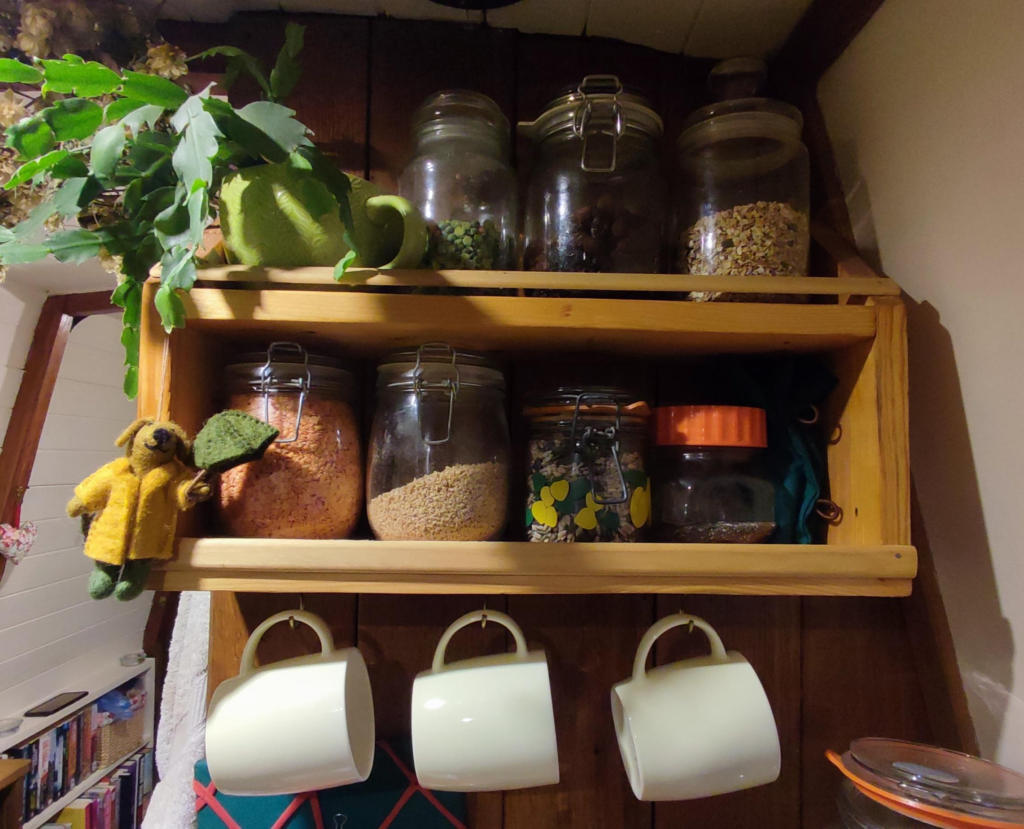
Winter has a way of reshaping the way we cook — especially in a small space. On the boat, our kitchen is little more than two narrow counters, a double burner, and two cupboards, brimming with goodies.
Once the cold sets in, we switch the fridge off completely. There’s not enough winter sun for the solar to keep it running, so we store things that need to be kepft cold in the hull below the water line.
And have an abundance of what keeps well: jars of lentils, dried pulses, tins of tomatoes, winter spices, and the kind of sturdy seasonal food that lasts without needing the chill.
Far from shops, we gather what we can when we can — a bag of potatoes from a farm stall, a cabbage that seems to last forever, a bundle of leeks, a few onions. These winter ingredients sit quietly in baskets and bowls, waiting to become something warm and comforting.
Somehow, cooking this way makes every meal feel more intentional. There’s no rushing, no abundance to fall back on — just simple choices shaped by the season.
The lack of space doesn’t feel like a limitation anymore. It feels like a rhythm…A slowness…
A kind of cooking that asks you to be present.
One pot on the hob. One bowl of soaking beans. A handful of lentils poured into a stew.
Steam rising into cold air. And the whole cabin warming beautifully with each small step.
Winter cooking in a small space has taught me to trust the basics — the everyday staples that feed us steadily when the world outside feels sparse. And it’s taught me that comfort doesn’t come from having more; it comes from making the most of what you already have.
Winter’s Simple Seasonal Food Staples
Winter’s gifts are humble, but rich in spirit:
• Pumpkins and squashes
Sweet, golden flesh perfect for soups, roasting, or baking into bread.
• Root vegetables
Carrots, parsnips, beets, potatoes — ingredients that pull us closer to the earth.
They teach us depth, slowing down, and gathering strength for winter.
• Leeks and onions
Soft and fragrant when cooked slowly, the quiet base of almost every comforting meal.
• Lentils and pulses
For soups, stews, and spicy dahls – their vibrant colours offer not only nutrition but a beautiful heartiness to our meals.
• Mushrooms
Earthy, grounding, carrying the scent of rain and forest floor into the kitchen.
Each ingredient has its own rhythm — its own way of teaching patience. We peel, chop, roast, and stir. We wait (sometimes for ages if the stove is slow). Cooking becomes less about consumption and more about connection.
Living in Tune With the Season
You don’t need perfection to feel nourished. You don’t need exotic ingredients or flavours flown in from far away. In winter, the most comforting food is often the simplest — the kind that grows close to home and asks very little of you.
Potatoes from a farm track a few miles away. Cabbage bought from a roadside honesty box.
A bag of onions that will see you through the coldest weeks. A sprig of rosemary that somehow survives on the bow, even when everything else fades.
These small choices are what weave us into the season we’re actually living in — into the land beneath our feet, into the quiet rhythm winter is offering.
On the boat, we try not to waste anything (this was the same when we lived in a house, too). Peelings become stock. Yesterday’s stew becomes today’s lunch. A soft apple becomes a warm dessert with just a sprinkle of sugar and cinnamon.
In this rhythm, there’s a quiet kind of respect — for the food, for the grower, for the earth that carries us through each season. Seasonal food isn’t a rule or a trend. It’s a relationship — slow, steady, grounding.
And winter is the season that reminds us how abundant simplicity can truly be.
Because when we learn to celebrate what’s already here — not what’s imported, not what’s out of reach — we begin to live in tune with the world again. And that, more than anything, is true nourishment.
The Heart Of Cooking Simply — Making the Most of What You Have
Cooking simply isn’t about going without — it’s about cooking with heart. It’s standing in front of your shelves and seeing possibilities instead of limitations. It’s the quiet confidence that grows when you realise you already have enough to make something nourishing.
In our small boat kitchen, there’s no room for excess — especially in winter, when the fridge sleeps and the days run on limited solar power. Strangely, that’s what makes cooking feel so rich. Everything has purpose. Every ingredient earns its place, not because it’s impressive, but because it’s honest.
A tin of beans. A handful of winter herbs. A pinch of spice. These simple things can turn cold evenings into comfort, a single pot into a small feast. Cooking this way feels less like a task and more like a gentle reminder: winter doesn’t need complexity to be delicious — just warmth, presence, and a willingness to make the most of what’s here.
The Comfort of Cupboard Staples
Our staples have become our comfort. Red and green lentils — humble, patient, deeply nourishing — thicken soups, stretch stews, and turn a few vegetables into something that feels like home. They’re small, unassuming things, but they hold the power to make a meal out of almost nothing.
Lentils have become part of our rhythm here: a handful in this pot, a scoop in that one, softening quietly in the background as the day unfolds.
Butter Beans & Herbs: A Ritual of Warmth
Then there are the fat butter beans — the kind that sit heavy in your hand. I love them most when they’re bathed in a bubbling tomato sauce, rich with garlic, olive oil, and herbs cut fresh from the pots on the bow.
Rosemary, sage, thyme — the holy trinity of comfort. Their scent fills the whole space, weaving through the boat like a promise that everything is well, everything is enough.
Wild Foraging & Slow Afternoons
On quiet afternoons, when the air sharpens, and the world feels a little distant, we forage.
Hazelnuts and chestnuts gathered from the hedgerows — treasures tucked into coat pockets, roasted over a low flame that evening.
And there’s something grounding about cracking them open one by one, the scent of wood and smoke curling through the air. Food like that feeds something deeper than hunger — it nourishes the part of us that longs for connection.
Cooking as Connection
Cooking this way — slowly, simply, with what winter offers — connects us.
To the season. To the land. To our own hands moving steadily through the small rituals that make a day feel whole. It asks us to slow down, to pay attention, to meet the moment instead of rushing through it.
A simple pot of winter soup becomes an act of gratitude. A stew becomes a quiet love letter to the earth that grew the vegetables. A loaf of bread torn in half becomes a shared softness in the middle of a cold evening.
I’ve learned that real comfort doesn’t come from complicated recipes or cupboards overflowing with choice — it comes from presence. But from stirring slowly. From listening to the soft scrape of a spoon against a pot. From the warmth that fills the cabin when something is simmering, just because it feels good to nurture yourself in that way.
In winter, these small moments matter more. They anchor you, soften you, remind you that nourishment can be simple — and still feel like enough.
The Stories Inside Every Meal
Every meal becomes a story of where we are: the rosemary that’s grown wild by the mooring,
the chestnuts gathered after rain, the lentils that waited quietly in their jar until we reached for them.
Cooking simply is, at its core, an act of connection — to the moment, to the earth, to each other. And the comfort it brings lingers long after the dishes are done.
Because when we make the most of what we have, we find something tender and true:
we already have enough.
The Season of Enough
There’s a moment, usually sometime deep in winter, when the world seems to settle into itself. The rush of the warmer months has long passed. The fields lie quiet beneath a pale sky. And the trees — bare, honest, unburdened — stand as if they’ve finally laid everything down.
This is the season of enough.
A season that doesn’t ask you to chase or gather or strive — it asks you to rest in what’s already here. In the warmth you make…In the food you have…In the stillness winter offers without apology. If you’re craving more gentle seasonal rhythm, you might love my Slow Living Guide.
The Rhythm of the Boat
On the boat, it’s impossible to ignore the rhythm of the season. Evenings arrive early now, settling over the water like a blanket. The air carries that familiar chill — the one that makes you crave warmth, company, and something slow on the stove.
Our meals follow suit: a pot of stew, a hunk of bread, apples baked with cinnamon until they melt into themselves. Nothing fancy — but everything felt.
This is winter’s way: a gentle reminder of what it means to be held.
Nourishment as a Circle, Not a Climb
What seasonal food teaches us is simple: nourishment isn’t a ladder to climb. There’s no summit, no perfect menu, no “best way” to eat. It’s a circle — returning again and again to gratitude.
Gratitude for the ingredients.
For the moment.
For the hands that cooked.
For the mouths that share.
We don’t need more to feel abundant. We just need to see what’s already here with softer eyes.
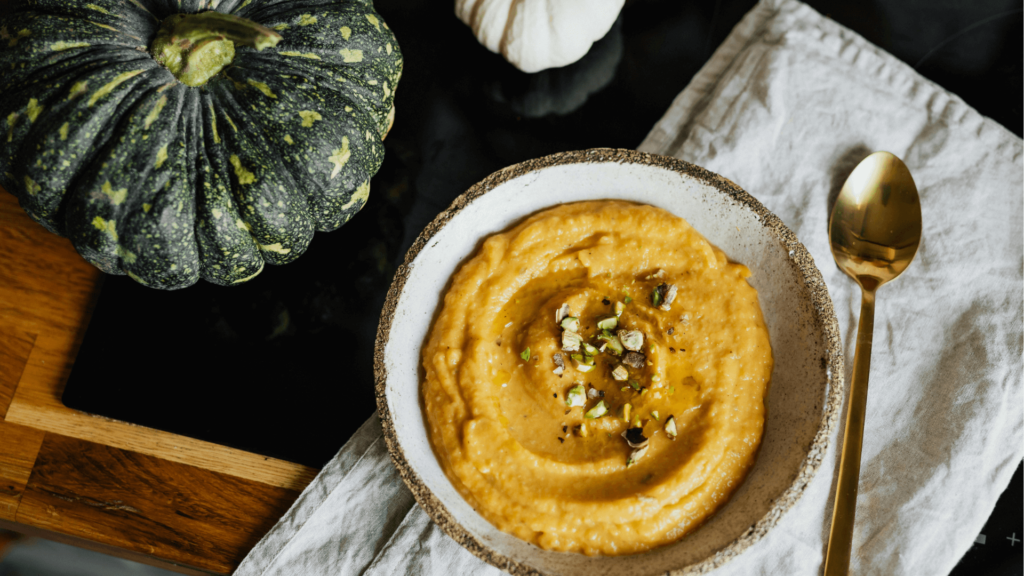
The pumpkin soup on the stove…
Steam rising in the shifting light…
The familiar sound of someone stirring beside you.
These are the small abundances that anchor us.
Letting the Season Hold You
Living simply and eating seasonally aren’t trends or checklists. They’re ways of remembering — ways of coming home to ourselves and to the earth that feeds us.
So let this season hold you. Let it feed you.
Gather what’s near. Cook what you have. Light a candle and sit for a while…
Taste slowly. Listen gently. Let comfort be enough.
Because maybe simplicity was never about having less — maybe it was about needing less.
Maybe “enough” isn’t something we chase — maybe it’s something we feel.
A Quiet Kind of Wholeness
And when we live like that — when we eat, rest, and move in step with the world instead of rushing ahead — life begins to hum again…
Steady…honest…whole.
We become, in our own quiet way, explorers of the simple life — and realise that everything we were searching for was already here, waiting in the season we’re in.
Author’s Note — from Simple Life Explorers
Winter always feels like a deep breath — the kind that fills you up before gently reminding you to let go. It’s the season that whispers slow down, that shows us the beauty tucked into quiet corners, small rituals, and simple moments.
When we first began living this way, I thought I was giving things up — big spaces, big plans, cupboards stocked for “just in case.” But what I found instead was more.
More peace…more connection…more meaning woven through the smallest parts of the day.
A pot simmering.
The scent of sage softening in butter.
The creak of the boat as it rocks against the water.
Cooking with simple seasonal food has become one of my gentlest teachers. It’s never been about perfection or making everything from scratch. It’s about noticing — paying attention to what the season offers and meeting it with gratitude.
A handful of apples from a farm stand.
A stew warming both hands and heart.
A candle lit before dinner, softening the edges of the evening.
These small acts carry their own quiet power. They remind us the world doesn’t need us to do more — it just asks us to be here. Present…open.
And willing to move at a pace that feels honest.
We’re not experts — just explorers. Feeling our way through each season one meal, one moment, one quiet discovery at a time. There’s no finish line and no right way — only the steady joy of living close to what’s real.
So wherever you are — in a city flat, a countryside cottage, by the sea, or on the river — I hope this season finds you grounded. I hope your home smells like something warm and good. I hope your meals are slow, your heart unhurried, and your days stitched together with small, ordinary miracles.
Because simple living isn’t a lifestyle.
It’s a love story — between you and the world, lived one quiet moment at a time.
FAQs
What does “seasonal food” really mean in winter?
Seasonal food is simply what grows naturally at this time of year — sturdy vegetables, winter greens, stored crops, and ingredients that keep well in colder months. It’s food that matches the season’s pace: slow, grounding, and deeply nourishing.
Can I eat seasonally even if I don’t live in the countryside?
Absolutely. Seasonal food isn’t about where you live — it’s about choosing what’s grown close to you, what’s abundant now, and what feels honest. Even city markets and small greengrocers carry winter produce that reflects the local season.
Do I need lots of ingredients to cook winter meals?
Not at all. Winter cooking thrives on simplicity — a few pulses, a handful of herbs, a pot of root vegetables. You don’t need a full pantry. You just need to start with what you already have.
How do you store food on the boat without a fridge?
In winter, the boat stays naturally cool, especially below the water line, which is fine for things like cheese and yoghurt. We rely on jars of lentils, dried pulses, grains, tins, and vegetables that store well. Seasonal food like potatoes, onions, squash, and cabbage lasts beautifully without refrigeration.
What are the best winter staples to keep on hand?
Lentils, beans, tinned tomatoes, oats, rice, winter herbs (fresh or dried), and root vegetables. These simple ingredients can stretch into soups, stews, bakes, and warming bowls that carry you through the colder months.
Is seasonal cooking more expensive?
Often it’s the opposite. Seasonal food tends to be more affordable because it’s local, plentiful, and hasn’t travelled far. A bag of potatoes or carrots in winter goes a long way, especially in simple one-pot meals.
How do I start cooking more simply?
Begin with one pot. One vegetable. One quiet moment. You don’t need elaborate recipes — just a willingness to slow down and taste what’s here. Seasonal food naturally nudges you into simplicity.
What makes winter food feel so comforting?
It’s the warmth, the slowness, the way flavours deepen with time. Winter meals often simmer, soften, and melt into themselves — the kind of cooking that seems to comfort you from the inside out.
How can I reduce food waste during winter?
Use peelings for stock, turn leftovers into tomorrow’s lunch, stew softer fruit, and freeze (or jar) anything you won’t use immediately. Seasonal food is forgiving — most of it stretches beautifully.
What’s the real benefit of living and eating with the seasons?
It brings you back into rhythm — with nature, with your home, with yourself. Seasonal food isn’t just nourishment; it’s a way of belonging to the moment you’re in. Winter becomes less something to get through and more something to savour.